Learning massage is not simply about memorising a sequence of movements.
A good massage practitioner needs to understand how to use different techniques, how to work with pressure, how to position the body and, most importantly, how to remain aware of the person receiving the work.
Different massage techniques can be used for relaxation, focused therapeutic work, muscular tension, fascial work, joint work and developing greater body awareness. Many techniques can also be combined during the same massage session.
At Meditative Touch, we place particular importance on conscious touch, slow movement and developing sensitivity through the hands. Here are some of the techniques and approaches that form an important part of therapeutic bodywork.
1. Conscious and Slow Massage Movements
Slow movement is an important part of the Meditative Touch approach.
Rather than rushing from one technique to another, the practitioner learns to move consciously and remain present with the body.
Slow massage movements allow the practitioner more time to notice changes in tissue, resistance and the person’s response to touch.
The movement does not have to be complicated. What matters is the quality of contact, awareness and control.
Conscious movement also helps the practitioner avoid working mechanically. Instead of simply repeating a sequence, the hands remain responsive to what is happening in the body.
2. Compression
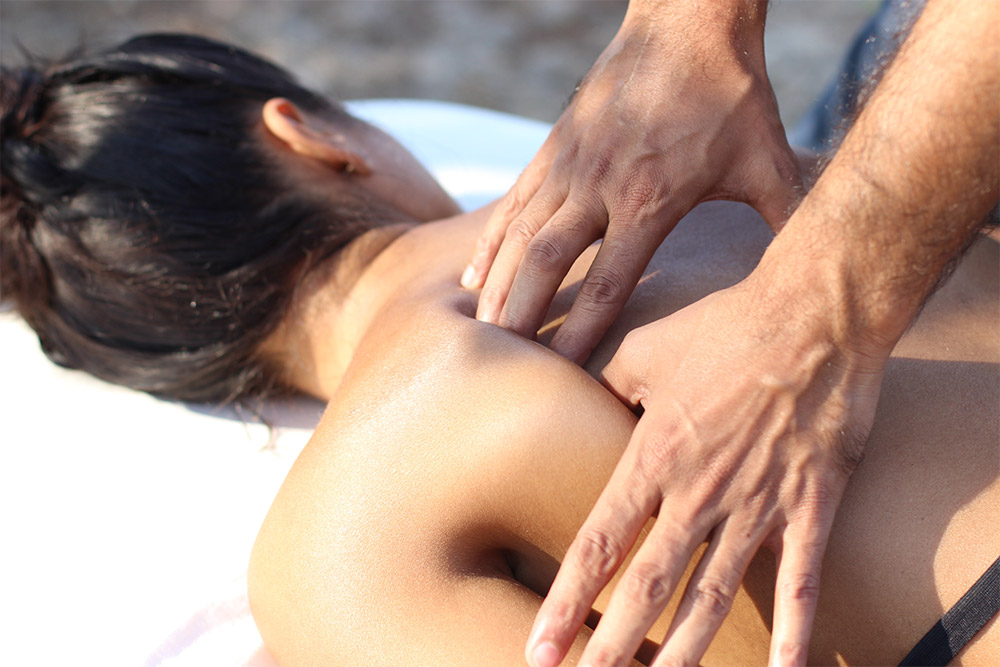
Compression involves applying pressure into the tissues rather than primarily moving the hands across the body.
It can be performed with the palm, fingers, thumb, knuckles, forearm or other parts of the body.
Compression can be useful when working with larger areas of muscle and can also be combined with slower, more conscious movement.
The practitioner needs to control both the amount and direction of pressure and should avoid relying only on muscular force from the hands.
3. Thumb and Finger Techniques
The thumbs and fingers allow a practitioner to work with greater precision.
They can be used for focused pressure, smaller areas and detailed work around muscles and connective tissue.
However, repeatedly relying on the thumbs with excessive force can place unnecessary strain on the practitioner’s hands.
Good body mechanics are therefore essential.
A skilled practitioner learns to use the thumbs and fingers when appropriate while also knowing when another part of the body can provide better support or pressure.
4. Knuckle Techniques
Knuckles can provide a useful alternative to the thumbs and fingers when working with larger or denser areas of tissue.
They can be used for focused pressure or slower movements depending on the area being worked on.
Using the knuckles effectively requires awareness of direction, pressure and body position.
As with all deeper massage techniques, the aim is not simply to create strong pressure but to work with control and sensitivity.
5. Forearm Techniques
The forearm provides a broader contact surface than the fingers or thumbs.
It can therefore be useful when working on larger areas of the body or when the practitioner wants to distribute pressure over a wider area.
Forearm techniques are particularly useful in deep tissue and therapeutic bodywork because the practitioner can use body weight rather than relying entirely on the strength of the hands.
Learning to work with the forearm can also help reduce unnecessary strain on the practitioner’s hands during longer massage sessions.
6. Elbow Techniques
The elbow can provide concentrated pressure and is sometimes used in deeper therapeutic bodywork.
Because the contact area is relatively small, elbow techniques need to be used with control and awareness.
The practitioner should pay attention to the person’s response and adjust the pressure and angle rather than assuming that deeper pressure is always better.
Elbow work is one tool among many. Knowing when to use it—and when not to—is part of developing good therapeutic touch.
7. Myofascial Techniques
Myofascial Release is an important part of therapeutic bodywork and differs from many traditional massage strokes.
Instead of continuously moving across the body, myofascial techniques often involve slower, sustained contact with the fascia and surrounding tissues.
The practitioner develops sensitivity to resistance and changes in the tissue rather than simply pushing harder.
This type of work requires patience and awareness.
For practitioners learning massage, Myofascial Release can introduce a different way of understanding touch—one where listening through the hands becomes as important as the movement itself.
8. Joint and Movement-Based Techniques
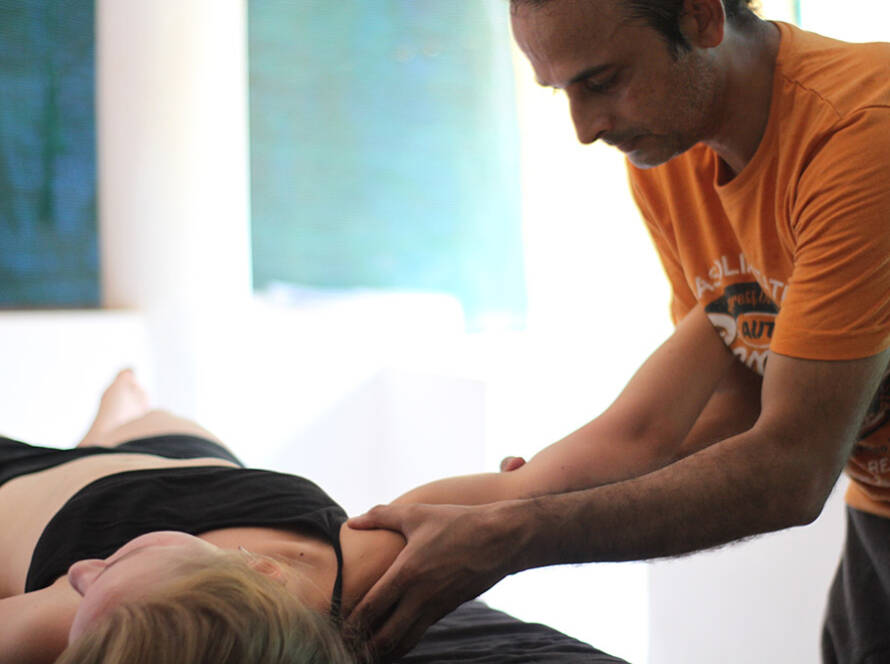
Massage does not have to involve only passive work on muscles and soft tissue.
Joint and movement-based techniques can also be incorporated into therapeutic bodywork.
Gentle movement can help a practitioner observe how different parts of the body relate to one another and can provide another way of working around areas of restriction.
At Meditative Touch, Joint Release and movement are incorporated into the broader approach rather than being treated as a completely separate system.
The practitioner learns to combine touch, movement and awareness according to the person and the situation.
9. Core Integration
Core Integration encourages the practitioner to work with the body as a connected whole.
A person’s experience in one area of the body may be related to how other areas move, support or compensate.
Instead of focusing only on the place where someone feels tension, an integrated approach looks at relationships within the body.
This way of working can help a practitioner develop a broader understanding of the body’s structure and movement.
At Meditative Touch, Core Integration is part of learning to work with the whole body rather than treating every area as an isolated problem.
10. Conscious Pressure and Body Weight
Effective therapeutic massage is not only about the hands.
A practitioner can use body weight, positioning and gravity to create pressure while maintaining greater stability and control.
This is particularly useful when working with the forearms and elbows, but it can also influence how the practitioner uses the hands and thumbs.
Learning to use body weight consciously can make the work more efficient and reduce unnecessary effort.
It also changes the quality of touch. Instead of forcing pressure into the body, the practitioner learns to allow pressure to come through a stable and well-positioned body.
Massage Techniques Are Tools, Not a Fixed Formula
Learning ten massage techniques does not automatically make someone a good massage practitioner.
The same technique can feel completely different depending on how it is applied.
Pressure, speed, direction, angle, body position and the practitioner’s awareness can all change the quality of the work.
For example, an elbow technique can be intense and focused or slow and controlled. A thumb technique can be precise and sensitive or unnecessarily forceful.
The skill is not simply knowing the technique.
The skill is knowing when, where and how to use it.
Body Mechanics Are Part of Good Massage Technique
One of the most important aspects of learning massage is body mechanics.
A practitioner who relies mainly on the strength of their hands may quickly become tired, particularly when performing deep tissue work.
Using the legs, pelvis, body weight, positioning and movement can make massage more efficient and controlled.
This becomes particularly important when using the elbows and forearms.
Good body mechanics are not only about protecting the practitioner. They can also improve the quality of touch because the practitioner is able to work with greater stability and less unnecessary effort.
Developing Sensitivity Through Touch
Massage techniques can be learned relatively quickly.
Sensitivity takes longer.
A practitioner needs to learn to notice differences in tissue, resistance, movement and the person’s response to pressure.
This is why hands-on practice is such an important part of learning massage.
The hands gradually become more perceptive through experience. Instead of simply thinking about which technique comes next, the practitioner begins to feel what is happening under the hands and respond accordingly.
This is an important part of conscious touch.
Combining Massage Techniques
In real bodywork, techniques are rarely used in isolation.
A practitioner might begin with slow, conscious movements, move into compression, use focused thumb or forearm work, introduce deeper techniques and then return to broader contact.
Myofascial techniques may be combined with Deep Tissue work. Joint techniques may be incorporated into a therapeutic massage. Sports-oriented bodywork may use both Myofascial Release and deeper massage techniques.
The ability to combine techniques gives the practitioner more possibilities than following one fixed massage routine.
Massage Techniques at Meditative Touch
The techniques described above form part of the wider bodywork skills explored through Meditative Touch.
Our approach includes Deep Tissue Massage, Myofascial Release, Joint Release, Core Integration, conscious touch and the use of different parts of the body—including fingers, thumbs, knuckles, elbows and forearms.
The emphasis is not simply on collecting massage techniques.
It is on developing the awareness and practical understanding needed to use those techniques appropriately.
For someone receiving a massage, this means the work can be adapted rather than following exactly the same sequence every time.
For someone learning massage, it means developing the ability to work with the body rather than simply working on it.
Learning Massage Is More Than Learning Techniques
Massage techniques are the foundation, but they are only the beginning.
A practitioner also needs to develop body mechanics, sensitivity, observation, communication and the ability to adapt.
With experience, the hands become more aware and the practitioner becomes less dependent on a fixed routine.
This is where massage can develop from simply performing techniques into a deeper practice of therapeutic bodywork.
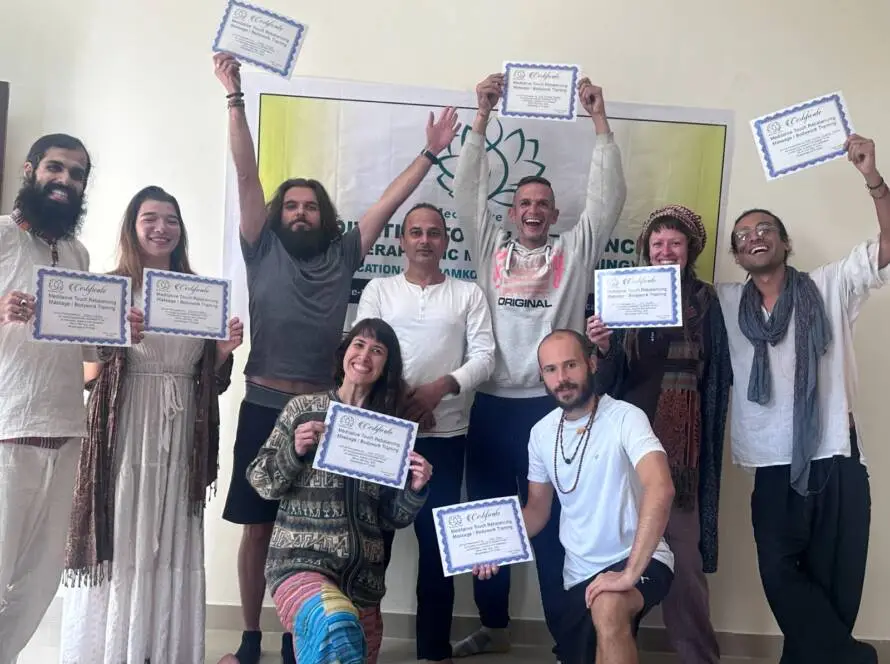
If you are interested in learning this approach to massage and bodywork, Meditative Touch offers professional hands-on massage training in India.