Deep Tissue Massage is one of the most widely known forms of therapeutic massage. It generally involves slower, more focused work and can use firmer pressure than a relaxation massage.
However, deep tissue massage is not simply about pressing harder.
Good deep tissue work requires an understanding of anatomy, body mechanics, pressure, direction and the way different tissues respond to touch. The practitioner needs to know when to work deeper, when to reduce pressure and when a different technique may be more appropriate.
At Meditative Touch, Deep Tissue Massage is part of a broader approach to therapeutic bodywork that also includes Myofascial Release, Joint Release, Core Integration and conscious touch.
What Is Deep Tissue Massage?
Deep Tissue Massage is a therapeutic massage approach that uses focused and often slower techniques to work with areas of muscular and connective-tissue tension.
The word “deep” can sometimes create the impression that the deeper or harder the pressure, the better the massage. This is not necessarily true.
The quality of deep tissue work depends on how the practitioner applies pressure and how the body responds.
Depending on the area being worked on, a practitioner may use the fingers, thumbs, knuckles, elbows or forearms. Body weight and positioning can also be used to create pressure without unnecessarily straining the practitioner’s hands.
Deep Tissue Massage Is Not Just Hard Massage
One of the most common misunderstandings about deep tissue massage is that it should always be painful or extremely intense.
A skilled practitioner should be able to adjust pressure according to the person, the area being worked on and the response of the tissue.
Sometimes deeper pressure is appropriate. At other times, slower and lighter contact may allow the practitioner to work more effectively.
Deep tissue massage is therefore not about proving how much pressure someone can tolerate.
It is about working with the body with control, awareness and appropriate pressure.
Deep Tissue Massage Techniques
Deep tissue massage can involve a variety of techniques rather than one fixed method.
Depending on the practitioner and the area being worked on, techniques may include:
* Slow and focused strokes
* Sustained pressure
* Thumb and finger work
* Knuckle work
* Forearm techniques
* Elbow techniques
* Compression
* Focused work around areas of muscular tension
* Techniques that work with connective tissue and fascia
The practitioner may also change position and use body weight to work more efficiently.
This is particularly important for massage therapists. Using body mechanics well can make deep tissue work more controlled and sustainable while reducing unnecessary strain on the practitioner’s hands and arms.
Deep Tissue Massage and Myofascial Release
Deep Tissue Massage and Myofascial Release are not the same thing, although they can overlap.
Deep tissue massage generally involves more focused and deeper work with muscles and surrounding tissues.
Myofascial Release focuses specifically on fascia and often uses slower, sustained contact.
In practical bodywork, these approaches can complement each other.
A practitioner may use deeper tissue techniques in one area and then change to slower fascial work depending on what they feel through their hands and how the body responds.
Understanding both approaches can therefore give a practitioner more possibilities than relying on one technique alone.
What Are the Benefits of Deep Tissue Massage?
People seek deep tissue massage for different reasons.
Some people enjoy the feeling of focused, deeper bodywork. Others are interested in working with areas that feel particularly tense or restricted.
Deep tissue massage may be used as part of a broader approach to:
* General muscular tension
* Areas of stiffness
* Physical recovery and body maintenance
* Relaxation after demanding physical activity
* Improving awareness of areas of tension in the body
The experience and results can vary from person to person.
Massage should not be presented as a cure for medical conditions, and deep tissue work is not appropriate for every situation. When someone has a medical condition, injury or uncertainty about whether massage is suitable, professional medical advice may be appropriate.
Is Deep Tissue Massage Supposed to Hurt?
No.
Deep tissue massage can sometimes feel intense, particularly when working on areas that are sensitive or tense, but pain is not the goal.
There is a difference between feeling strong, focused pressure and experiencing pain that the body is clearly resisting.
Communication between the practitioner and client is important. Pressure can be adjusted during the session according to comfort and response.
A good deep tissue massage is not a competition between the client and practitioner to see how much pressure can be tolerated.
What to Expect During a Deep Tissue Massage
Every practitioner has their own way of working, but a deep tissue massage will generally involve more focused and slower work than a typical relaxation massage.
The practitioner may spend more time on particular areas rather than moving continuously over the entire body.
You may experience different types of pressure during the session, including work with the hands, thumbs, knuckles, forearms or elbows.
The practitioner may also change the position of your body depending on the area being worked on.
Communication is important throughout the session. If pressure feels uncomfortable or too intense, it should be communicated so that the practitioner can adapt the work.
Deep Tissue Massage for the Back
The back is one of the areas where people commonly seek deep tissue massage.
The muscles and connective tissues of the back are influenced by posture, movement, physical activity and the way the rest of the body moves.
Deep tissue work on the back may involve the hands, forearms, elbows or other techniques depending on the practitioner.
However, deeper pressure is not automatically better. A practitioner needs to understand the structures being worked on and adapt their approach rather than simply applying maximum pressure.
Deep Tissue Massage for Physically Active People
Deep tissue techniques can also be useful for people who exercise regularly or place greater physical demands on their bodies.
This is one reason deep tissue work often overlaps with Sports Massage.
Sports-oriented bodywork may incorporate techniques such as deep tissue work, Myofascial Release and focused pressure according to the person’s activity and needs.
However, Deep Tissue Massage and Sports Massage are not necessarily the same thing. Sports Massage is a broader approach associated with physical activity and athletic performance, while deep tissue refers more specifically to a style of focused bodywork.
The Importance of Body Mechanics
For the practitioner, deep tissue massage is not only about having strong hands.
Good body mechanics are extremely important.
A practitioner can use their body weight, positioning, alignment and movement to create effective pressure rather than relying entirely on the muscles of the hands and arms.
This can make the work more controlled and sustainable.
Learning how to use the elbows, forearms, thumbs and other parts of the body effectively can also give the practitioner more options when working with different areas of the body.
Deep Tissue Massage at Meditative Touch
Deep Tissue Massage is an important part of the bodywork we practise at Meditative Touch.
Our approach is not based on the idea that deeper always means better.
We combine focused and deeper techniques with Myofascial Release, Joint Release, Core Integration and conscious touch.
The practitioner learns to pay attention to the body rather than simply following a fixed routine.
Pressure, speed, direction and technique can all change according to what is being felt through the hands and how the person responds.
For us, deep tissue massage is therefore not simply a technique for applying strong pressure. It is a way of developing greater sensitivity, control and understanding of the body.
Learning Deep Tissue Massage
If you are interested in learning Deep Tissue Massage professionally, it is useful to learn more than a collection of strong-pressure techniques.
Developing good body mechanics, learning how to use different parts of the body, understanding pressure and developing sensitivity through the hands are all important parts of becoming a skilled practitioner.
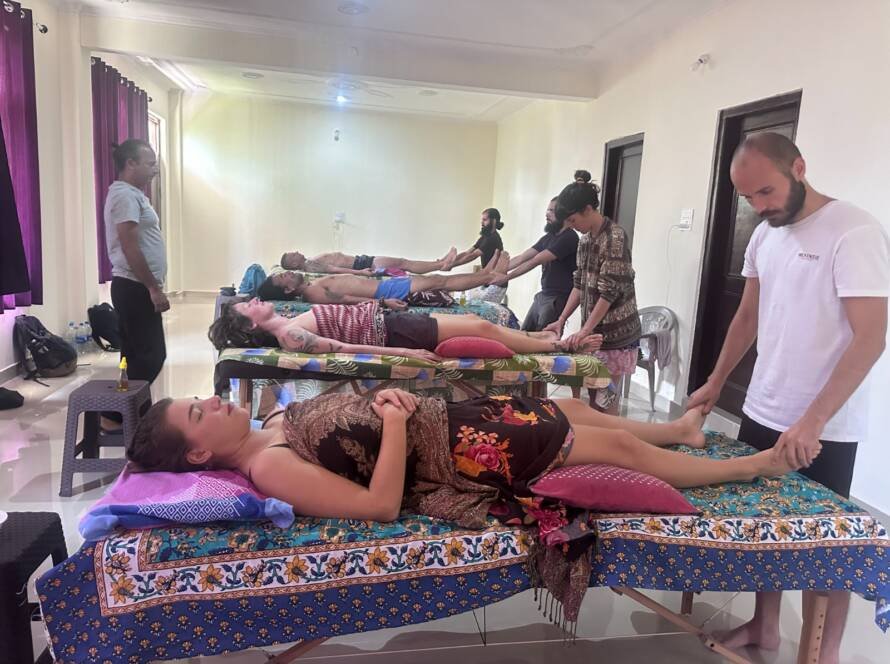
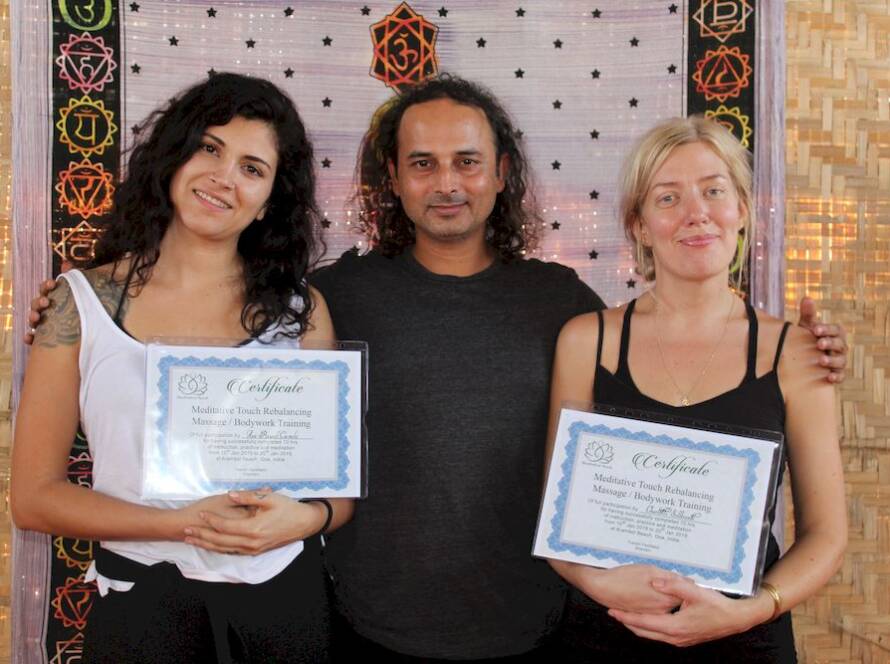
At Meditative Touch, Deep Tissue Massage is taught as part of a broader therapeutic bodywork approach, alongside Myofascial Release, Joint Release, Core Integration and conscious touch.
If this is the kind of bodywork you would like to learn, you can explore our Meditative Touch Massage Training in India.