Choosing a massage training course is an important decision. There are many massage schools, courses, workshops and private trainers available, and they can differ considerably in what they teach, how much practical experience they provide, and what their certificates actually represent.
If you are searching for a massage training course in India, especially if you are travelling from another country, a course that looks attractive online may not necessarily be the right course for you.
Before registering, it is worth asking a few simple questions.
1. What Will You Actually Learn?
Start by looking beyond the name of the course.
“Massage certification,” “massage therapy course,” “massage school” and “massage training” can mean very different things depending on the training provider.
Look for a clear curriculum that tells you what you will actually practise.
Depending on your interests, this might include:
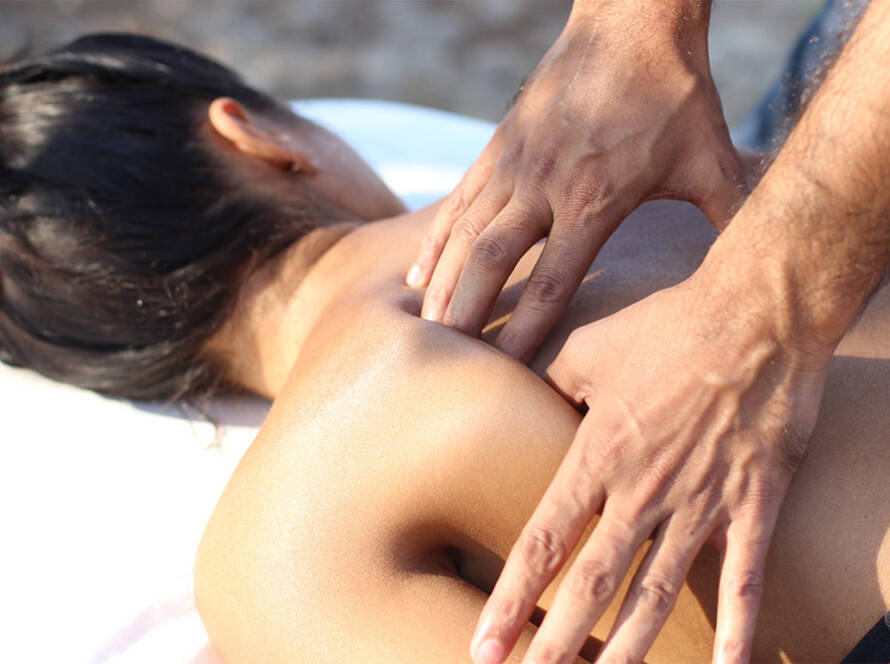
* Basic and therapeutic massage techniques
* Deep Tissue Massage
* Myofascial Release
* Joint Release techniques
* Body mechanics
* Working with different parts of the body
* Positioning and draping
* Pressure and pacing
* Client communication
* Body awareness and sensitivity
If you are comparing massage courses in India, don’t look only at the name of the course. Find out what you will actually be doing during the training.
A good massage training course should make its curriculum reasonably clear before you register.
2. How Much Hands-On Practice Is Included?
Massage is a practical skill.
Reading about a technique or watching someone demonstrate it is very different from actually performing it.
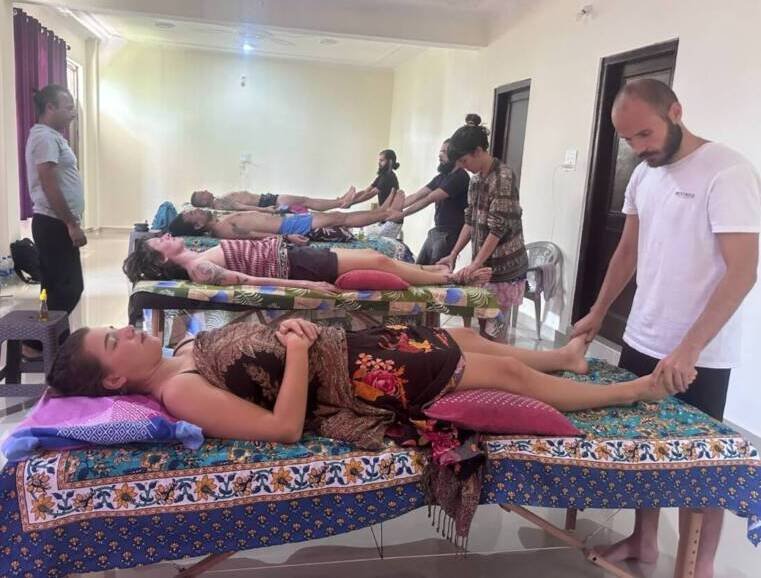
If you are looking for hands-on massage training in India, ask how many hours of the course are dedicated to practical work.
Also ask whether students practise on one another, whether the trainer observes their work, and whether there is enough time to receive feedback and correct technique.
For someone learning massage for the first time, this can be more important than simply collecting a long list of techniques.
A course may advertise many different massage techniques, but if most of the training is theoretical or demonstration-based, you may finish knowing what a technique looks like without feeling confident performing it.
3. Who Is Teaching the Course?
The experience of the trainer matters.
If you are considering professional massage training in India, look at the background of the person actually teaching you.
Ask:
* How long have they practised bodywork?
* How long have they been teaching?
* What approaches have they studied?
* Do they still work hands-on with clients?
* Can you find genuine information about their experience?
A trainer’s personal approach to touch can have a significant influence on how you learn.
It is also worth looking beyond certificates and titles. Years of hands-on experience and years of teaching can tell you something different from a list of qualifications alone.
4. How Large Is the Training Group?
Class size can make a big difference in practical training.
In a very large group, it can be difficult for one teacher to observe everyone’s technique and give individual feedback.
A smaller group can allow more direct guidance and more opportunity to practise.
This doesn’t mean that a small group automatically makes a course better, but it is certainly something worth asking about when comparing massage schools in India.
Ask how many students are accepted for each training and how much individual attention you can realistically expect.
5. How Long Is the Training?
Be careful when comparing courses based only on the number of days.
A “10-day massage course” and another “10-day massage course” may contain very different numbers of teaching hours.
Ask for the actual number of training hours and find out how much of that time is practical.
It is also worth asking whether breaks or days off are included in the advertised duration.
If you are travelling to India specifically to learn massage, the total number of hands-on training hours is often more useful to know than simply the number of calendar days.
6. What Does the Certificate Actually Mean?
This is an important question that is sometimes overlooked.
Not every massage certificate has the same status.
Some courses are accredited or recognised by particular organisations, while others provide a private certificate of completion from the trainer or training school.
Neither should be described as something it isn’t.
Before registering for a massage certificate course in India, ask:
- Who issues the certificate?
- Is it accredited or recognised by a particular organisation?
- What does the certificate confirm?
A reputable training provider should explain this clearly rather than using vague language such as “international certification” without explaining what that means.
A certificate should confirm what you actually completed. It should not imply a government, university or professional accreditation if none exists.
7. Is the Course Suitable for Beginners?
You don’t necessarily need previous massage experience to begin learning bodywork.
If you are searching for massage training for beginners in India, check whether the course is designed for people starting from the beginning or whether previous professional experience is expected.
A good beginner’s course should give you time to understand basic body mechanics, pressure, positioning, touch and technique rather than assuming that you already know how to work with a client.
If you already work as a massage therapist or bodyworker, look for a course that allows you to develop your existing skills rather than simply repeating basic material.
8. What Is the Teaching Approach?
Two trainers can teach similar techniques in completely different ways.
Some courses concentrate heavily on memorising sequences.
Others place more emphasis on understanding the body, developing sensitivity and adapting techniques according to the person receiving the massage.
Think about the kind of practitioner you want to become.
Do you want to learn a particular massage sequence?
Or do you want to understand how to use your hands, pressure, movement and body mechanics more intelligently?
There is no single correct answer. The important thing is to choose a training style that matches your goals.
For some students, therapeutic massage training means learning a specific set of techniques. For others, it means developing a deeper understanding of touch and learning how to adapt their work to the individual.
9. What Is Included in the Course Fee?
Before paying a deposit, make sure you understand what is and isn’t included.
Ask about:
- Training hours
- Course materials
- Certificate
- Accommodation
- Food
- Oils or other materials
- Additional charges
- Registration or deposit requirements
Accommodation and food are often separate from the training fee, particularly for courses held in destinations such as Goa or Rishikesh.
If you are travelling from abroad for a massage course in India, also consider the practical costs of your trip, including flights, local transport and accommodation.
Knowing these things beforehand prevents unpleasant surprises later.
10. What Should International Students Consider?
India attracts students and travellers from many different countries who are interested in massage, bodywork, yoga, meditation and other holistic practices.
If you are coming to India from abroad specifically for massage training, there are a few additional questions worth asking.
Is the training taught in English?
If English is not your first language, ask how the trainer communicates with international students and whether you will have enough opportunity to ask questions and practise techniques.
Is accommodation included?
Many training providers do not include accommodation in the course fee. Find out whether you need to arrange your own room and whether the trainer can recommend nearby places to stay.
How much practical training is included?
This is particularly important when travelling a long distance for a short course. You want to know that your time in India will include substantial hands-on practice rather than mainly demonstrations or theory.
What does the certificate represent?
If you plan to use your training professionally after returning home, understand exactly what certificate you will receive and what it represents.
Professional requirements for practising massage can also vary between countries and locations, so it is your responsibility to check the rules that apply where you intend to work.
Is the course suitable for your experience level?
Some international students arrive with years of bodywork experience, while others have never given a professional massage before.
A good training provider should be able to tell you honestly whether the course matches your background and expectations.
11. Speak to the Trainer Before You Register
If possible, have a conversation with the trainer.
Ask questions.
Explain your previous experience, if any, and what you hope to learn.
This is particularly useful when you are travelling from another country and choosing a massage training course in India without having visited the school before.
Pay attention not only to the information you receive but also to whether the trainer is willing to answer your questions clearly.
You should feel comfortable understanding what you are paying for before you make a commitment.
Choosing the Right Massage Training for You
There is no single massage course that is right for everyone.
A beginner may want a strong practical foundation. An experienced therapist may be looking for new approaches to bodywork. Someone interested in working professionally may have different requirements from someone learning massage for personal interest.
The most important thing is to understand exactly what a course offers before registering.
Look at the curriculum.
Look at the practical hours.
Research the trainer.
Ask about the certificate.
Understand the costs.
Find out what is included.
And, most importantly, choose a training environment in which you feel you can learn and practise comfortably.
About Meditative Touch Massage Training
At Meditative Touch, the training is centred around hands-on therapeutic massage and conscious touch.
The training includes approaches such as Deep Tissue, Myofascial Release, Joint Release, Core Integration, body mechanics and body awareness, with an emphasis on developing sensitivity rather than simply memorising massage sequences.
The training is 11 days and 70 hours, with small groups and extensive hands-on practice.
It is suitable for both beginners and experienced bodyworkers.
The training is conducted in English and students come from different countries and backgrounds.
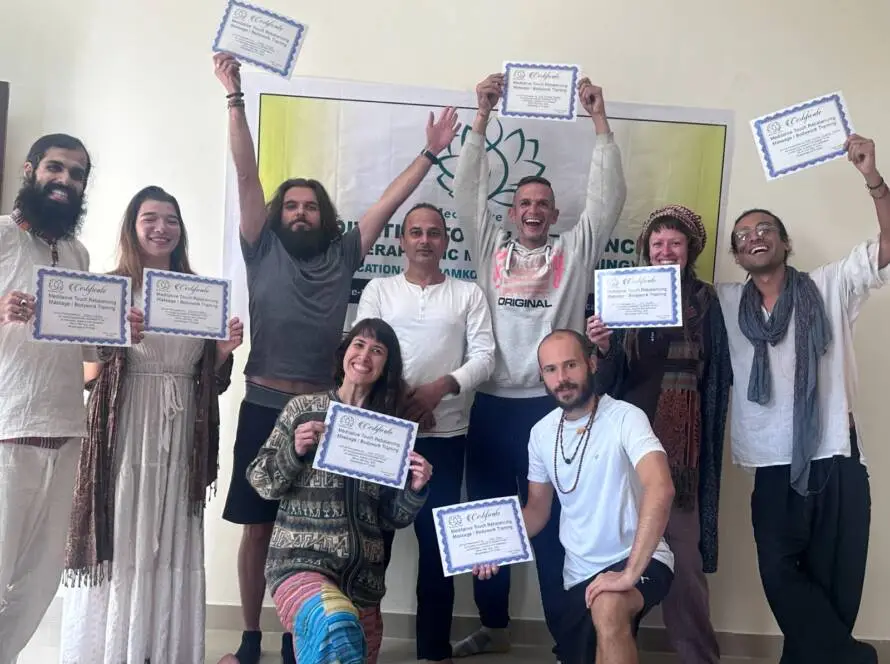
The certificate issued is a private professional Certificate of Completion confirming participation in the stated training curriculum and hours. It is not presented as a government- or university-accredited qualification.
Training is currently offered in India at selected locations, with Goa being the main training base during the season.
If you are considering massage training in India, you are welcome to contact us with questions before deciding whether the course is suitable for you.
Learn more about Meditative Touch Massage Training in India →